Two warnings travel around Waxhaw yards by word of mouth, and both get mangled in the retelling. The first says oak trees are all dying of something called oak wilt and no one should ever prune one. The second says crepe myrtles must be cut back to knuckles every winter, because that is how they bloom. One warning exaggerates a real risk into paralysis; the other dresses a damaging habit up as a requirement. Sorting them claim by claim is the fastest way to keep both trees healthy.
Oak wilt is a real fungal disease that kills oaks, spread through root connections between nearby oaks and carried to fresh wounds by insects in warm months. Crepe murder is the equally real nickname arborists give to topping crepe myrtles, cutting main stems back to stubs each year. The table below takes the common claims one at a time.
The claims, sorted
| Claim | Verdict | The accurate version |
|---|---|---|
| Never prune an oak, ever | False | Prune oaks in full dormancy, mid to late winter, when insects and fungus are inactive. Avoid spring and early summer cuts except for hazards. |
| Oak wilt spreads between neighboring oaks underground | True | Root grafts between nearby oaks of the same group can carry the fungus tree to tree, which is why cluster losses happen. |
| Painting oak cuts prevents disease, so timing does not matter | It depends | On oaks, wound paint on fresh cuts in risk season is one of the few accepted uses, as a barrier, but dormant timing remains the primary defense. |
| Crepe myrtles need hard cutting every year to bloom | False | They bloom on new growth regardless. Unpruned trees bloom fine, with larger, natural branch structure and no knuckle scars. |
| Topped crepe myrtles just grow back, so no harm done | False | Regrowth is weak, crowded shoots attached at the cut knuckles, prone to breaking, and the repeated wounds shorten the tree's healthy life. |
| A crepe myrtle that outgrew its spot should be replaced, not beheaded | True | Choosing a cultivar sized for the space beats annual topping. Dwarf and mid-size varieties exist for exactly this reason. |
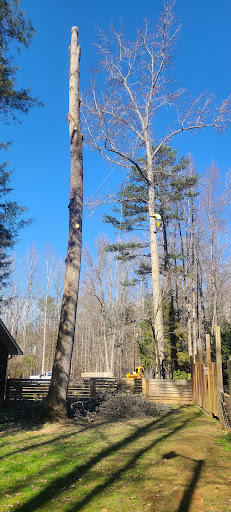
Oak wilt: the working rules
Strip away the exaggeration and the practical rules are few. Prune oaks in winter dormancy whenever the work is planned. Treat warm-season wounds as urgent business only when a storm forces them, and get fresh cuts on oaks sealed promptly in that season as a physical barrier to visiting insects. Take firewood and brush from a wilt-killed oak seriously as a spread risk, and do not move it casually to a property full of healthy oaks. And watch clusters: an oak declining fast in spring, with leaves wilting from the top down, near other oaks, deserves a prompt professional diagnosis, because the underground spread pattern means the neighbors are part of the same case.
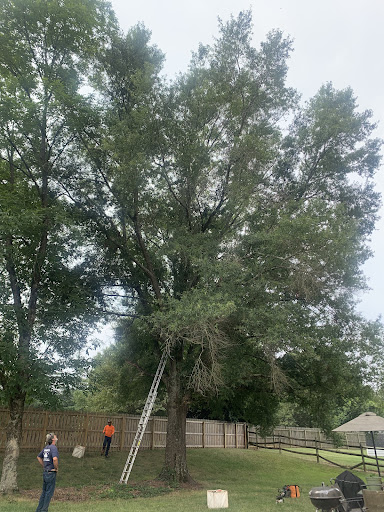
Crepe myrtles: what to do instead
The correct pruning for a crepe myrtle is light and specific: in late winter, remove crossing branches, weak interior twigs, spent seed heads if you like the clean look, and suckers at the base. Keep the main trunks and the natural vase shape the tree is trying to build. A myrtle already carrying years of knuckles can often be rehabilitated over two or three seasons by selecting the strongest shoots at each knuckle and removing the rest, a slower repair a crew like Rhodes Tree Service LLC can map out. What never needs to happen again is the annual beheading, no matter how many yards on the street still do it each February.
There is a neighborhood effect worth naming in both warnings. Crepe murder spreads by imitation; one topped row on a street teaches the next street that knuckles are normal, and landscapers get asked to match the look. Oak wilt risk spreads by calendar; one crew pruning oaks in April normalizes warm-season oak cuts for everyone watching. Being the yard that prunes oaks in January and lets its myrtles keep their shape is a small, visible correction that tends to travel the same way the bad habits did.
Common questions
When is it safe to prune my oak in Waxhaw?
Mid to late winter, when the tree is fully dormant, is the safest window. Avoid creating fresh wounds in spring and early summer, when the insects that can carry oak wilt are active.
My crepe myrtle has big knuckles from years of topping. Is it ruined?
Not necessarily. Many recover much of their form over a few seasons of selective pruning that keeps the strongest shoots and removes the crowded weak ones. An arborist can judge how far rehabilitation can go.
Does oak wilt affect all oak types the same way?
No. Red oak group trees tend to die quickly once infected, while white oak group trees often decline more slowly and sometimes contain the disease better. Both groups warrant prompt diagnosis when symptoms appear.
← All guides from Rhodes Tree Service LLC← Back to Rhodes Tree Service LLC