Two pruning cuts can remove the same branch and leave completely different futures behind. A cut made flush against the trunk strips away the branch collar, the swollen ring of tissue where branch meets trunk, and leaves a large wound that the tree may never fully close. A cut made just outside that collar, in the sequence called the three-cut method, leaves the tree's own sealing system intact. The branch looks the same on the ground. The tree knows the difference for decades.
This comparison is for Waxhaw homeowners who prune small trees themselves and hire out the big work. Understanding the method helps either way: it tells your hands what to do on the low branches, and it tells your eyes what to watch for when a crew works your oaks, because collar damage done in an afternoon cannot be undone.
The two cuts compared
| Factor | Flush cut (against the trunk) | Collar cut (three-cut method) |
|---|---|---|
| Cut position | Through the collar, flat against trunk or parent limb | Just outside the branch collar and bark ridge |
| Wound size | Larger, oval, includes trunk tissue | Smaller, round, limited to the branch's own diameter |
| Sealing | Slow and often incomplete; decay column forms behind it | Wound wood closes evenly from the edges over seasons |
| Decay risk | High; the trunk's defenses were cut away | Low when the collar stays intact |
| Stub risk | None, but at too high a cost | None when finished correctly; a long stub left instead also rots |
| Best use | Essentially none on living branches | Every removal cut on a branch of any size |
The three cuts, in order
The method exists because of bark tearing. A heavy branch cut straight through from the top will peel a strip of bark down the trunk as it falls, creating exactly the wound everyone was trying to avoid. So the first cut is an undercut, a short way out from the trunk, cutting up through about a third of the branch. The second cut is from the top, slightly farther out, which drops the branch; it stops at the undercut, so no bark tears. The third cut is the finish: with the weight gone, the remaining stub is cut cleanly just outside the collar, at a slight angle that mirrors the bark ridge. Three cuts, one extra minute, and the trunk keeps its defenses.
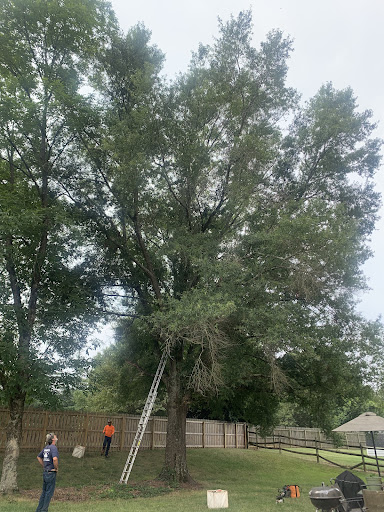
Collar care and the small print
Finding the collar is the skill. On most branches it shows as a visible bulge or a change in bark texture at the base, with a raised bark ridge in the angle above the branch. Cutting just beyond those landmarks, without nicking them, is the whole craft. Small branches on young trees can be done with hand pruners in a single cut, since their weight will not tear bark, but the position rule stays identical. Wound paints and sealers are not part of the method; current arboricultural guidance leaves cuts bare, since the tree seals from the collar, not from a coating.
What about old flush cuts already on your trees? They cannot be recut into correctness, and carving at them makes things worse. The tree is already doing what it can; your job is to stop adding new ones. When a crew from Rhodes Tree Service LLC or any Waxhaw service prunes your trees, the stumps left on the trunk after their visit tell you, at a glance, which method you paid for.
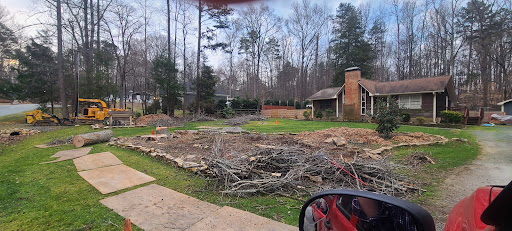
The same collar logic scales down to the smallest work. When you deadhead a crepe myrtle, thin a young maple, or take a crossing branch off a dogwood with hand pruners, the cut still lands just outside the collar, never flush and never leaving a peg. Small branches seal within a season or two when the collar survives, which is why young trees pruned correctly in their first decade rarely carry the rot pockets that older, flush-cut trees develop at every old wound. Good habits on the ladder-free work are also rehearsal for judging the big work: once your eye learns to find the collar and the bark ridge on small branches, you will spot them, or their absence, in every cut a crew leaves behind.
Common questions
What exactly is the branch collar?
It is the swollen ring of tissue where a branch joins the trunk or a larger limb, containing the cells that grow wound wood to seal a cut. Leaving it intact is what allows a pruning wound to close.
Is a leftover stub as bad as a flush cut?
Both are problems. A stub dies back and rots toward the collar, while a flush cut removes the collar itself. The correct cut sits between the two errors, just outside the collar.
Should I paint pruning cuts to protect them?
Generally no. Research-based guidance is to leave cuts unpainted so the tree's natural sealing proceeds. Paint can trap moisture against the wound and does not substitute for correct cut placement.
← All guides from Rhodes Tree Service LLC← Back to Rhodes Tree Service LLC