Nobody removes a healthy tree on a whim. By the time a Waxhaw homeowner asks the question, something has already changed: the oak leans a little more than it used to, the maple dropped another dead limb on the driveway, or the pine is simply standing where a patio is supposed to go. The decision that follows deserves more than a shrug and a saw, because removal is permanent, and so are some of the risks of keeping a failing tree over a roof.
This piece walks the assessment the way a tree crew does it: start with what you can see from the ground, sort the tree into one of four broad stories (dead, leaning, diseased, or in the way), and end at the honest line between what a homeowner can judge and what needs a professional in or under the tree.
The ground-level assessment walk
Begin at the base and work up, slowly, from several angles. At the base, look for the trunk flare sitting at grade, any fungal growth such as mushrooms or shelf-like conks, cracks in the soil on one side, and soil heaving, all of which speak about roots. On the trunk, look for cavities, long cracks, peeling bark, seams where two leaders join with included bark, and old wounds that never closed. In the canopy, estimate the share that is dead; scattered small dead twigs are normal, while whole dead sections, an off-balance crown, or a tree that leafed out on only part of its limbs are telling you a different story.
- Walk the base. Check the flare, look for fungal growth, root damage from mowers or construction, and soil lifting or cracking on the lean side.
- Read the trunk. Cavities, cracks, bulges, and tight V-shaped unions between leaders are structural warnings; note their size and height.
- Estimate canopy dieback. A rough share of dead canopy over a quarter is a serious decline signal, especially if it grew since last season.
- Check the lean honestly. A long-standing lean a tree grew into is different from a new lean after a storm, which can mean root failure in progress.
- Map the targets. List what the tree or its limbs can reach: roof, driveway, play areas, fences, and the neighbor's yard count too.
- Decide the category. Dead, hazardous, declining, or simply in the way; the category decides urgency, not just the verdict.
- Get a professional assessment for anything structural. Internal decay, root condition, and the safety of a takedown are beyond ground-level diagnosis.
The four stories, and what each one means
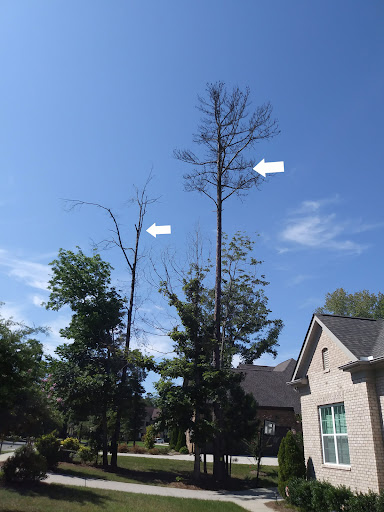
A dead tree is the straightforward case: no living canopy, brittle wood, and a schedule set by what stands under it. Dead trees also get more dangerous to climb the longer they stand, so waiting a year rarely makes the job simpler. A newly leaning tree is the urgent case, because a lean that changed after wind or saturated soil can mean the root plate is letting go. A long-stable lean, by contrast, is often just how the tree grew toward light, and may be monitored rather than removed.
Disease and decline make the judgment calls. Some problems are manageable for years with pruning of dead wood and good care; others, such as advanced internal decay signaled by conks at the base, mean the tree's structure is quietly hollowing while the canopy still looks respectable. The fourth story is the honest one: a healthy tree in the way of a project, too close to the house as it matures, or dropping limbs, sap, and shade where a family now lives differently than it did twenty years ago. Removing a healthy tree for use-of-yard reasons is a legitimate decision; it just deserves to be made as one, rather than dressed up as a safety emergency.
Where the professional line sits
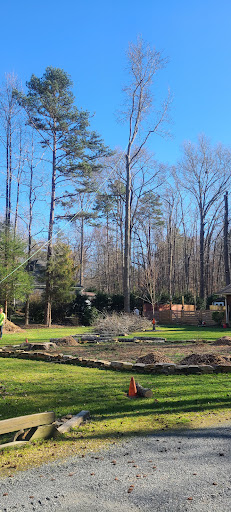
The walk above tells you whether to call, not what the saw should do. Judging how much sound wood remains around a cavity, whether a cracked union can be cabled or must come down, and how a takedown gets sequenced over a roof are professional calls, and they change the price and the plan. A crew like Rhodes Tree Service LLC will make that assessment on site in Waxhaw. Ask what they found, in plain terms: a good assessment names the defect, the target, and the timeline, and separates what must happen now from what can be watched.
Common questions
How much dead canopy means a tree should come down?
There is no single number, but dieback over roughly a quarter of the canopy, growing year over year, usually signals decline that pruning will not reverse. Species, cause, and what stands underneath all shape the call.
My tree leans. Is it automatically dangerous?
No. A lean the tree grew with over years is often stable. A lean that appears or increases after a storm, especially with cracked or lifted soil at the base, is urgent and should be assessed promptly.
Can a diseased tree be saved instead of removed?
Sometimes. Early problems and surface issues can often be managed, while advanced decay or structural disease cannot be reversed. An on-site assessment that shows you the evidence is how that decision should be made.
← All guides from Rhodes Tree Service LLC← Back to Rhodes Tree Service LLC